
.jpg?width=300&name=Website_CollaborationSoftware-Hero%20(optimized).jpg)
Collaborative project management software has become essential for modern teams, yet many organizations struggle to maximize its value. Despite investing in management collaboration software, teams still experience miscommunication, duplicated effort, and project delays. The problem isn't the tools - it's how teams use them.
What is project collaboration software?
Project collaboration software combines communication and collaboration capabilities with project management functionality, enabling teams to work together effectively regardless of location. Unlike traditional project management tools that focus purely on task tracking, collaboration and project management software integrates real-time communication, document sharing, and visual planning to create unified workspaces.
Modern collaboration platforms go beyond basic project management software by connecting strategy with execution. They enable remote teams and hybrid workforces to maintain alignment, share context, and make informed decisions through visual transparency rather than scattered email chains and status meetings.
Common collaboration challenges in project management
Organizations face predictable collaboration obstacles that undermine project success:
Information silos: Team members work with outdated information because updates remain trapped in individual tools like Google Drive or email threads.
Miscommunication: Critical context gets lost between stakeholders, causing rework that can increase project costs by 30% or more.
Strategic misalignment: Without visibility into dependencies and business objectives, teams pursue conflicting priorities that waste resources and delay strategic outcomes.
Can better collaboration tools reduce project delays or miscommunication?
Better collaboration tools centralize information, decisions, and updates in one shared space. Instead of relying on long email chains, outdated spreadsheets, or disconnected systems, teams work from a single source of truth.
By visualizing project status, dependencies, and risks in real time, everyone understands what’s happening and why. This transparency reduces miscommunication, shortens approval cycles, and helps teams identify issues early - before they turn into costly delays.
Step 1: Establish strategic alignment from day one
Before diving into task execution, ensure every team member understands how their work supports broader business goals. Effective management and collaboration software connects individual tasks to strategic objectives, showing why work matters beyond completion percentages.
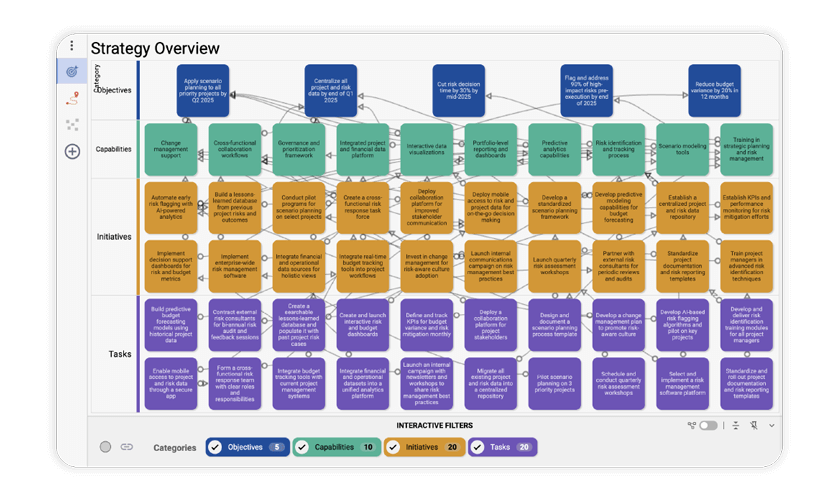
Action: Use visual roadmaps to map project initiatives against strategic objectives. When teams see these connections clearly, they make better decisions about priorities and resource allocation.
Impact: Organizations that maintain strategic alignment through visual collaboration reduce scope creep and improve on-time delivery by connecting tactical work to measurable business outcomes.
Step 2: Choose integration over fragmentation
The average organization uses 15+ collaboration tools, creating information fragmentation that undermines teamwork. Rather than adding another isolated platform, choose online collaborative solutions that integrate with existing systems like Microsoft 365, project management tools, and communication platforms.
Action: Implement collaboration software that connects data from multiple sources into unified views. Look for key features including:
- Real time collaborative editing and updates
- Bi-directional integration with existing project management software
- Visual planning capabilities beyond basic Gantt charts and Kanban boards
- Centralized team communication alongside project context
Impact: Integration eliminates manual data entry and ensures everyone works from the same strategic truth, reducing coordination overhead and accelerating decision-making.
Step 3: Make collaboration visual and transparent
Traditional project management tools focus on lists and spreadsheets that obscure relationships and dependencies. Visual collaboration transforms how teams understand complex projects, making strategic context immediately accessible.
Action: Replace text-heavy status reports with interactive visual dashboards that show:
- Project dependencies and interdependencies across initiatives
- Resource allocation and capacity constraints
- Risk exposure and mitigation status
- Progress against strategic milestones
SharpCloud's visual collaboration capabilities enable stakeholders to explore project data dynamically rather than consuming static reports, improving transparency and accountability across departments.
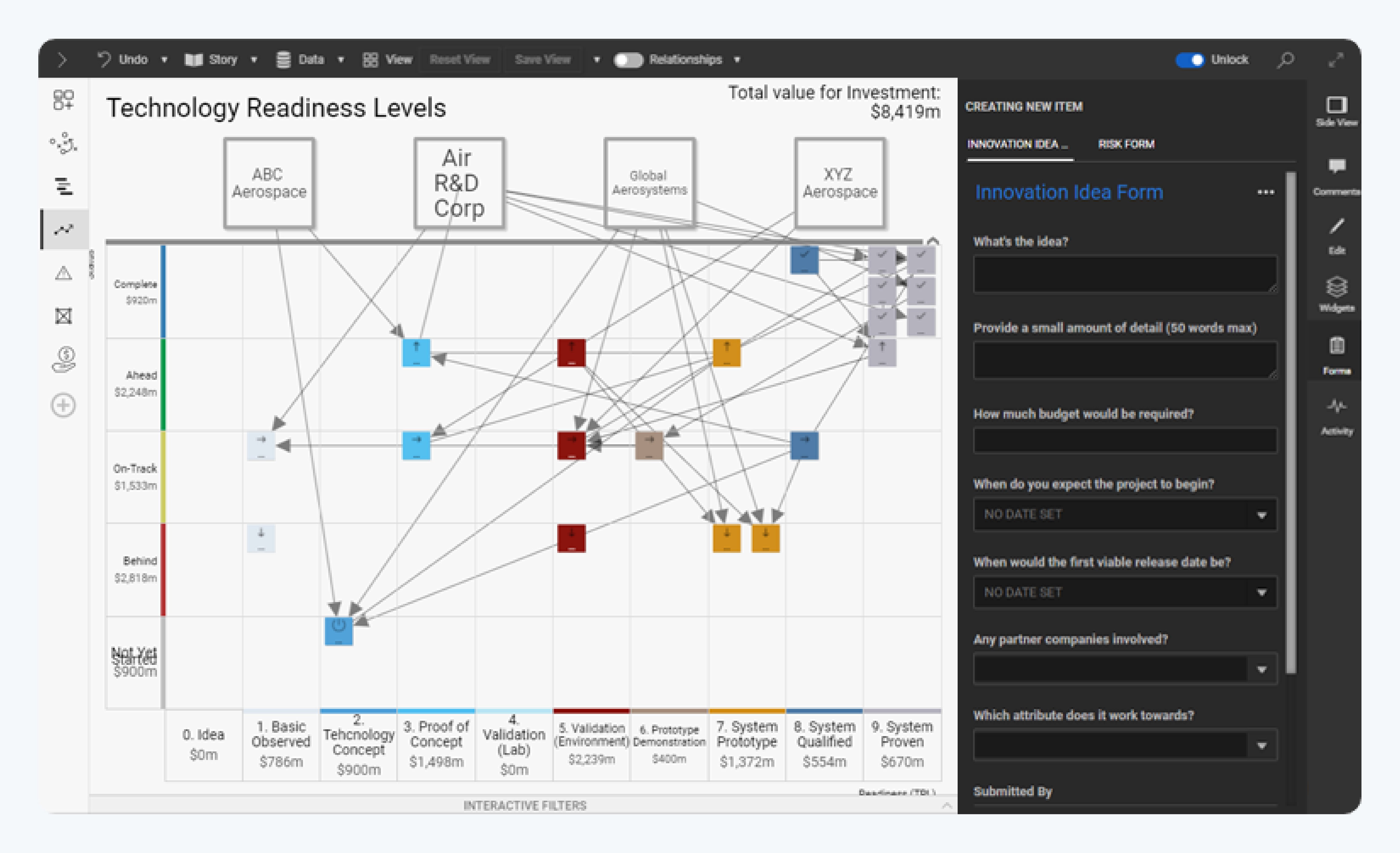
Impact: Visual collaboration reduces status meeting time by 40% while improving stakeholder understanding and enabling faster course corrections based on real-time project intelligence.
Step 4: Structure workflows without constraining flexibility
Effective collaboration balances structure with adaptability. Define clear processes for how teams manage tasks, assign tasks, and communicate progress, but maintain flexibility for different project types and team preferences.
Action: Establish collaboration maturity stages:
- Ad hoc: Teams adopt basic features (time tracking, task assignment)
- Structured: Standardized workflows with templates and communication and collaboration protocols
- Strategic: Portfolio-level visibility connecting multiple projects to business objectives
Tools offering rigid workflows often fail because they don't accommodate real-world project variability. Choose platforms that support both operational discipline and strategic flexibility.
Impact: Structured flexibility improves adoption rates while maintaining the adaptability needed for complex project environments where requirements evolve based on market conditions.
Step 5: Measure, learn, and optimize continuously
The best collaboration software provides insights into what's working and what isn't. Track metrics that demonstrate collaboration ROI and identify optimization opportunities.
Action: Monitor collaboration health indicators:
- Improved communication metrics (response times, information accessibility)
- Decision velocity (time from question to resolution)
- Rework reduction (percentage of work requiring revision)
- Strategic alignment scores (initiatives supporting key objectives)
- Cross-functional engagement (participation across departments)
Impact: Organizations measuring collaboration effectiveness achieve 25% faster project delivery and 30% reduction in rework through data-driven collaboration improvements.
Why choose SharpCloud for strategic collaboration?
SharpCloud transforms project collaboration from tactical task coordination into strategic capability. Unlike traditional project management tools focused on individual project execution, SharpCloud provides:
Portfolio-level visibility: See how collaboration and dependencies span multiple projects and departments, not just isolated initiatives.
.png?width=828&height=500&name=Website_PMvPPM-Product5%20(optimized).png)
Strategic context: Connect every collaboration activity to business objectives, ensuring teams understand why their work matters.
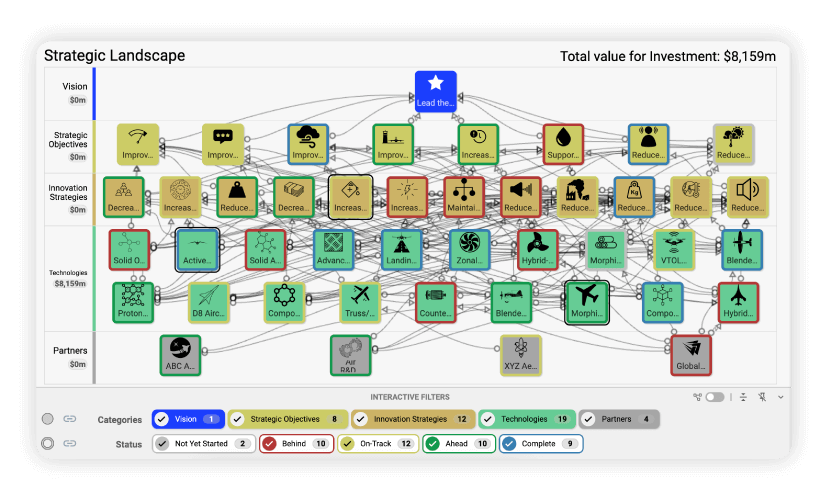
Visual intelligence: Interactive dashboards replace static reports, enabling stakeholders to explore data and answer questions dynamically.
.png?width=819&height=500&name=Blog_HowToProduct_VisualizeDashboard%20(optimized).png)
Universal integration: Pull data from existing collaboration platforms and project management software into unified strategic views.
Adaptive workflows: Support diverse collaboration needs across different project types, teams, and organizational levels.
Conclusion
Effective project collaboration software doesn't just manage tasks - it transforms how teams to work together strategically. By establishing strategic alignment, integrating tools, visualizing relationships, structuring workflows intelligently, and measuring outcomes, organizations unlock collaboration's full potential.
Remote teams and hybrid workforces require more than basic project management tools. They need platforms that connect strategy with execution, provide real-time transparency, and support the complex collaboration patterns modern projects demand.
